

"There's no other trick like it. One takes the most unrefined and sourest wine in all of France and, as if by magic from a hat, produces the most brilliant, luxurious creation in the world of wine." That's Oz Clarke writing about Champagne, and he's not wrong. Champagne is one of winemaking's great transformations — a cold, difficult, northerly region turning what should be a liability into an asset.
But how does it actually work? What do all those terms on the label mean? And where does natural sparkling wine fit in? Let's go through it properly.
Where Champagne Comes From

The vineyards of Champagne sit about two hours east of Paris, concentrated along the valleys of the Marne and Seine rivers. The region is France's northernmost wine-producing area, which explains both its challenge and its genius.
Champagne has five main sub-regions:
- Côte des Blancs — the most prestigious, known for Chardonnay on chalk hillside slopes, home to the category called *Blanc de Blancs*
- Marne Valley — red grape country, with Grand Cru villages Ay and Tours-sur-Marne
- Montagne de Reims — the coldest zone, dominated by Pinot Noir, home to nine Grand Cru communes including Ambonnay, Bouzy, and Verzenay
- Côte des Bar (Aube) — a separate southern area near Chablis, known for Pinot Noir, whose wines are often blended with northern zones
- Côte de Sézanne — planted only since the 1960s, essentially an extension of the Côte des Blancs, producing ripe, exotic Chardonnay
Seven grape varieties are officially permitted for Champagne production, but the vast majority is made from three: Chardonnay (elegance, citrus, mineral), Pinot Noir (body, structure, red berry depth), and Pinot Meunier (fruitiness, roundness, approachability).
How Champagne Is Actually Made
Champagne's method — the méthode traditionnelle — is one of the most labour-intensive processes in winemaking, which is partly why it costs what it costs. Here's what's happening inside each bottle:
1. Base Wine Production
The grapes are pressed and fermented into a still wine — the idea is to keep alcohol around 11%, because the secondary fermentation in the bottle will add more.
2. Assemblage (Blending)
This is where the cellar master's art really lives. Wines from different grape varieties, different vineyard plots, and often different vintages are blended together to create a consistent, complex result. The assemblage can involve dozens or even hundreds of component wines, each with different characteristics.
Dom Pérignon, the 17th-century Benedictine monk famous for his work at Hautvillers Abbey in Champagne, was not, as legend has it, the inventor of sparkling Champagne — in fact, he spent much of his career trying to prevent bubbles. But his genuine contribution was elevating assemblage to an art form, recognising that consistent quality in Champagne's difficult climate required masterful blending.
3. Secondary Fermentation in the Bottle
The finished blend is bottled with the addition of liqueur de tirage — a mixture of wine, sugar, and yeast. The bottles are sealed and placed in the cellar, where the yeast consumes the sugar, producing carbon dioxide trapped inside the bottle. This is where the bubbles come from. 4 grams of sugar per litre creates about 1 atmosphere of pressure; achieving the typical 6 atmospheres requires approximately 24 grams.
4. Autolysis (Ageing on the Lees)
Once fermentation is complete, the dead yeast cells settle in the bottle. Over time — and this is crucial — those yeast cells break down, imparting aromas of bread, toast, biscuit, and brioche to the wine. This process is called autolysis, and its intensity depends entirely on how long the wine spends on the lees. French law sets minimums of 15 months for non-vintage Champagne and 36 months for vintage wines. In practice, serious producers age their non-vintage wines for 2–3 years on lees, vintage wines for 4–5 years, and prestigious cuvées for up to a decade.
5. Riddling (Remuage)
Before the sediment can be removed, it needs to be collected in the neck of the bottle. This is done by gradually rotating and tilting the bottles — traditionally by hand in special racks called pupitres, today more often by mechanical gyropalettes that achieve the same result faster. The credit for inventing the riddling rack goes to Antoine de Müller of Veuve Clicquot, who developed it in 1816.
6. Disgorgement (Dégorgement)
The neck of the bottle is frozen, trapping the sediment plug in solid ice. The bottle is opened, pressure expels the frozen plug, and the wine is ready for dosage. This final step introduces a small amount of oxygen into the wine and opens a new phase of its development.
7. Dosage
After disgorgement, a small amount of liqueur d'expédition is added — a mixture of wine and sugar — to adjust the final sweetness level and balance the wine's high natural acidity. The amount of sugar determines the category:
- Brut Nature (Zero Dosage / Non-Dosage): 0 g/l of residual sugar — the driest, purest expression of the wine
- Extra Brut: 0–6 g/l
- Brut: 6–15 g/l — the most common style
- Extra Dry: 12–17 g/l (despite the name, this is noticeably sweeter than Brut)
- Sec: 17–35 g/l (actually quite sweet)
- Demi-Sec: 33–50 g/l (dessert-level sweetness)
The average dosage in Champagne today is around 10–12 g/l.
How Champagne Was Actually Invented (It's Not What You Think)
The story of Champagne's invention is less about genius and more about serendipity — and it didn't happen in Champagne.
The earliest written record of sparkling wine in France comes from the Saint-Hilaire abbey in the commune of Limoux (in Languedoc) in 1531 — more than a century before sparkling Champagne existed. The monks there had long produced a sparkling wine from the local Mauzac grape using what they called the méthode rurale (rural method), still sold today as Blanquette de Limoux.
Meanwhile, Champagne was struggling with an embarrassing problem. Because Champagne is so far north, the wine would often stop fermenting in autumn before all the sugar was consumed — the yeast went dormant in the cold. When spring arrived, the yeast woke up and resumed fermentation inside sealed bottles, producing carbon dioxide and, frequently, exploding glass. The wines were called "le vin du diable" — the devil's wine. Winemakers, including Dom Pérignon, were desperately trying to prevent this from happening, not to bottle it.
The first person to document how to deliberately create sparkling wine through secondary fermentation was British scientist Christopher Merret, who presented a paper to the Royal Society in 1662 — twenty years before Champagne's "invention." English glassblowers, using coal furnaces, produced much stronger bottles than the French, which could actually contain the pressure. The English also had access to high-quality Portuguese corks (a trading benefit of the Treaty of Windsor). It was England that first made sparkling wine on purpose.
Champagne only fully embraced its effervescence when it became apparent that its distinctiveness was an asset rather than a flaw.
NM vs. RM: The Label Code That Actually Matters
Every bottle of Champagne carries a registration code — two letters followed by a number. Here's what the two most important ones mean:
NM (Négociant Manipulant): A large Champagne house that buys grapes or base wine from growers. The focus is on creating a consistent house style across vintages, using assemblage to maintain predictability. Think Moët & Chandon, Louis Roederer, Bollinger. Dosage typically runs 6–12 g/l. MLF (malolactic fermentation) is often blocked to preserve freshness.
RM (Récoltant Manipulant): A grower-producer who grows their own grapes and makes their own Champagne. The philosophy is the opposite of the NM: the emphasis is on expressing a specific terroir, a specific vineyard, a specific year. Dosage tends toward zero or very low (Brut Nature or Extra Brut). MLF is often not blocked. The result is wines with more vintage variation and a clearer sense of place — what some call grower Champagne or Champagne de Vigneron.
The main trend in the quality-conscious Champagne world today is treating the wine as a wine first and a sparkling wine second: evaluating it for aroma, taste, volume, depth, and content — not just for its bubbles.
Grand Cru — and Why It Doesn't Work the Same Way
In Champagne, Grand Cru status is assigned to entire villages, not individual vineyards (unlike Burgundy). There are 17 Grand Cru villages, all in the Marne département. Less than 9% of Champagne's vineyards receive this designation. It originated in the Échelle des Crus system — a ladder of growths that used to determine grape pricing, with 100% for the best villages (Grand Cru) and 90–99% for Premier Cru villages. Although the original pricing system has been abolished, the classifications remain and continue to signal quality.
The best Champagnes, however, are not simply those made from Grand Cru grapes. The art of assemblage means that blending skill and cellar practice matter as much as vineyard origin. Many outstanding Champagnes include grapes from Premier Cru areas. The magic is in the blend.
Natural Sparkling Alternatives
If you're excited about natural wine, you'll be pleased to know that there are compelling alternatives to conventional Champagne that apply natural wine principles to sparkling production.
Grower Champagnes from RM producers who farm organically or biodynamically — using indigenous yeasts, low dosage or zero dosage, extended lees ageing, and no blocking of malolactic fermentation — are as close to natural Champagne as you can get. Anselme Selosse of Champagne Jacques Selosse is the most famous example: he uses a solera system for his Substance, ageing and blending across vintages in a way that builds extraordinary complexity.
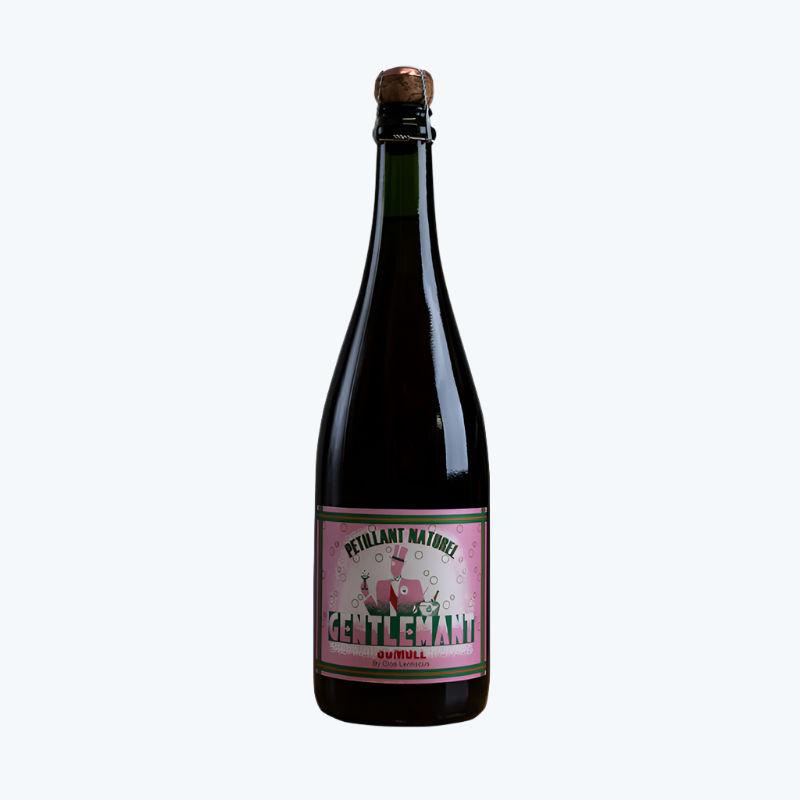
Pétillant Naturel (Pét-Nat) uses the méthode ancestrale — the oldest sparkling wine method, which Limoux was using in 1531. The wine is bottled before primary fermentation is fully complete, so it finishes fermenting in the bottle without any addition of sugar or yeast. The result is gentler bubbles, often a small amount of sediment, and a wine that tastes more raw and direct — less biscuity, more primary and fruity. Pét-nats are widely made by natural producers across France, Portugal, Italy, and beyond, and they represent one of the most accessible entry points into natural wine.
Cremant wines — made by the traditional method across several French regions outside Champagne (Alsace, Loire, Burgundy, Limoux) — offer comparable quality and complexity at significantly lower prices, and many natural producers work within these appellations.
The key thing to know is this: great sparkling wine doesn't require extraordinary intervention. It requires extraordinary fruit, careful cellar work, and enough time. The best natural sparkling wines remind you of exactly that.
MUR's selection includes grower Champagnes, pétillant naturels, and classic-method sparkling wines from across Europe. Ask our team what's open today.


